WARNING: This post contains descriptions of animal cruelty.
News of an attempted poisoning at Canal Creek broke via The Courier on 30 Nov 1861, and was then republished in a number of other papers in the subsequent weeks. The significance of this event, for this blog at least, is that it forms part of the history of Karara.
The first breaking of the news and all of the subsequent repeats suggest that Mr Thomas Gillespie was the intended victim of the poisoning, so it is interesting that when the matter is heard, the intended victim is identified as Robert Michelmore.
Perhaps more interesting than the actual poisoning are the details we can learn about what life was like at the Canal Creek Station in 1861.
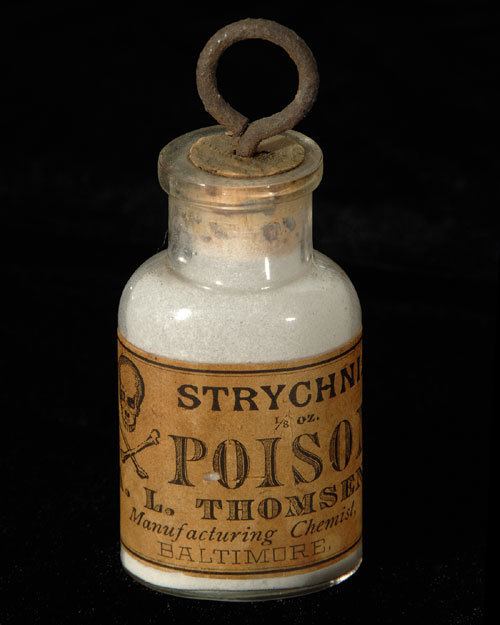
Firstly the ready availability of two substances which are now very tightly regulated, strychnine and opium. The strychnine is clearly seen in this article, but the remark made in the deposition of Gillespie ... “I asked her [Mrs. Rawlins] to show me the hash she had cooked, and she did so; I smelt it, and then said there was no opium in it; opium is easily detected by the smell” … suggests that opium was both available and in sufficient circulation that someone like Gillespie could recognise it. Strychnine was used both medicinally and as a poison for vermin, perhaps most significantly for the control of wild dogs which were a particular concern to sheep based operations. The danger associated with strychnine was well understood and the there are many accounts in the papers of the day recording its use in murder and suicide. Opium was also used medicinally, and while opium dens as places of recreational use are often associated Chinese people (it seems appropriate to indicate that the Chinese addiction to the substance can probably be blamed on the English ... unfortunately the mechanics of the Opium Wars are too complex to discuss here). Regulations to control opium will come into effect at the end of the century in focus.
Secondly, there is the employment of a Chinese shepherd, Ting. The use of Chinese Shepherds is closely associated with broader themes associated with the cessation of the transport of convict labour to Australia and the practices of recruiting or enslaving cheap indentured labour. Chinese people have played a significant role in the colonial development of Australia as a nation, and are one of my focal points for this blog.
Thirdly, the judges closing remarks “it was with deep regret that he had to try so weighty and serious a calendar, including the crimes of murder, &c., ... it was the heaviest assizes during his residence as a judge in Queensland, and he trusted the matter would receive serious consideration, as the character of the district of which Toowoomba is the assize town was at stake.” In 1864, Judge Lutwyche will also give similar lament on the state and size of the Western District trial list and would give it the name, the Black Assize.
The Courier of 30 Nov 1861
A case of poisoning, of a most serious nature has lately occurred not many miles from here. Mr. Thomas Gillespie, a gentleman residing near Canal Creek, and engaged in pastoral pursuits, had sat down to dinner a few days since, in company with some friends, when, fancying the dish before him had either a peculiar smell or taste, his suspicions were aroused, and he at once caused the contents to be divided into four parts, and given to four different dogs on his station. The result was that the dogs soon died, and on their intestines being analysed, a large quantity of strychnine was found. Suspicion at once fixed on a man employed as cook on the station, who was immediately secured. The matter is undergoing a magisterial enquiry, so that I forbear to give you further particulars one way or another until the case is concluded, when you shall have a summary of the Police-office proceedings. By whose hand administered, or how the poison came there, one thing is certain, Mr. Gillespie and party have had an escape next to miraculous.
TOOWOOMBA ASSIZES. (1862, January 23). The Toowoomba Chronicle and Queensland Advertiser (Qld. : 1861 - 1875), p. 3. Retrieved July 10, 2020, from http://nla.gov.au/nla.news-article212786899
POISONING WITH INTENT
John Seymour alias John Lynch stood indicted for what he did on the 17th November, at Canal Creek, feloniously and unlawfully administer two drachms of a deadly poison named strychnine to one Robert Michelmore, with the intention of murdering the said Robert Michelmore. There were three other counts in the information arising out of the above. The prisoner pleaded not guilty, and was defended by Mr. Jones; attorney, Mr. Hamilton,
Robert Michelmore deposed: I was in the employment of Thomas Gillespie in November last; the prisoner was employed as cook there at the time; on Sunday, the 16th, I returned home about half-past six or seven o'clock in the evening, and then went to get my supper in the kitchen; Mrs. Rawlins was the only person there at the time; the prisoner was in his bedroom, which is under the roof as the kitchen, and only divided by a slab partition, and he could hear all that was said there ; Mrs. Rawlins gave me a plate of mutton hash which she took from a saucepan that stood at the fire-place; when I had taken and swallowed one spoonful I thought it tasted very bitter; I then tried a second and did not swallow it because it had so nauseous a taste ; the bitter taste remained in my mouth for about an hour, and till I went to bed ; when I spit out the mouthful I passed the plate to Mrs. Rawlins and told her to taste it, and she did so, and she said she did not know what was in it, but that it was very bitter; she spit it out; heard prisoner in his bedroom say "It is soot that fell from the chimney;" I then said that it could not be soot, or it would have discoloured the hash; prisoner then said that the Chinaman Ting had been knocking about the kitchen all day, and per-haps he may have put something in it ; the place where I sleep is ten or twelve yards front the kitchen — a cottage by itself — the door of which is always left open when I am away, and the prisoner was in the habit of going there everyday to lay the (table and fetch the meals; Mrs. Rawlins went there the two days she was cooking for the prisoner ; had some strychnine in a bottle in my place; it was kept in a box, the lock of which and been broken, and there was no fastening to it; the bottle with the strychnine was labelled ; the prisoner has seen me several times take it and give some of the contents to the shepherds ; Mrs. Rawlins never saw me take the bottle; the following Sunday morning I examined the bottle, and there appeared to have been some taken from it since the last time I had seen it.
By Mr Jones: It might have been a week or ten days since I saw the bottle ; it was labelled "strychnine," as we got it from the chemists; prisoner had been nearly five months there, and was a quiet man ; he complained of being ill and was lying by for two days; Mrs. Rawlins and the Chinaman were doing prisoner's duty those two days.
Thomas Gillespie sworn: I reside at Canal Creek, and know the prisoner. John Seymour; he was employed as a cook by me; Mrs. Rawlins was laundress in the house, and had been better than 18 months there ; Ting, a Chinaman, had been in my employ nearly three years as a shepherd ; on Thursday night, the 14th November, prisoner told me he did not feel very well, and asked me to give him some medicine; he said he would come for some the following morning, but when it was offered him he refused to take it, and said he would be obliged to me if I got some other person to cook for a day or two, and I got Mrs. Rawlins to do so; on the 15th saw the prisoner in bed; Ting the Chinaman's flock of sheep were being draughted, and he was waiting to take a fresh lot; he was there on the 15th and 16th; when I returned home Mrs. Rawlins made some remark to me in reference to my dinner, and in consequence of that I went over to the kitchen; the prisoner was then in his own room ; I asked her to show me the hash she had cooked, and she did so; I smelt it, and then said there was no opium in it; opium is easily detected by the smell , I tasted the hash, and it was very bitter, and the taste remained a long time in my mouth ; have tasted strychnine, and was of opinion the taste of the hash was the same ; after dinner I again asked to see it— but did not, and on the fol-lowing morning, a little utter sunrise, I went round to the back of the kitchen to see where it had been thrown out, but could not see anything; the prisoner was then in the kitchen at his usual work, and appeared quite well; I then said there was something strange had happened the previous night, and asked prisoner if he knew anything about it, and he said "No;" I then asked him to show me the two pups that had died— they were about fourteen or fifteen yards behind the kitchen ; I then told prisoner I believed the pups had been killed by strychnine, and asked him if he had given them any, and he said " No— what would make me poison my own dogs?" prisoner then returned to the kitchen, and I to my office to write, and when I was there about half-an-hour Mrs. Rawlins came in and told me to look at a goose — it was lying on its back, flapping and kicking about, and appeared to have twitchings; I then gave the goose some water, and returned to my office ; saw Ting, and he showed me where he had thrown the hash out the night before — it was ten or eleven yards from the back of the kitchen — the remains of it were covered over with ashes; saw prisoner immediately afterwards, and called him from the kitchen and asked him if he had thrown ashes over the hash, and he said he had not; I then accused the Chinaman of doing so in prisoner's presence, and he said he had not done it; I then said that someone had put something in the hash to do harm, and the man that put the ashes there was the guilty party ; the prisoner again said he had not done it; I then asked him if he had seen any other person do it, and he said " No," and that no person could have got ashes from the kitchen without his seeing them; after breakfast I called the prisoner and Ting, and in the presence of the overseer accused each of throwing the ashes on the hash, and they both denied having done so; I then took them over to the pups, and they said they had given them no poison ; I cut the pups open and took out their sto-machs and put them in separate jars; some of the contents did not appear very different from that of the hash; gave one of the jars to Constable Dempsey, of Warwick, and the other to Constable Harris, of Leyburn; I gave the prisoner, Ting, and Mrs. Rawlins in charge; I also collected the moistest part of the hash and put it in a small jar, which was also given to Dempsey ; I told the two men that something had happened which ought not, and as I could not get to the bottom of it they were to be off; I was then in my office, and heard my brother call out that the Chinamans's two dogs' were dead; I then shut the books, and told the prisoner the matter should be cleared up before I set-tled with him ; I went out and saw the overseer dragging a dog in each hand behind him ; Ting was following him, crying about his dogs ; the appearance of the dogs were the same as the pups — quite stiff; I opened them and took out their sto-machs — one contained liver and a quantity of the stew, and the other — that of the larger dog— I cut out whole, tied each end up, and gave them over to Constable Harris; the prisoner owned the mother of the two pups, and was not in the habit of tying her up, but I believe she was tied up on the Sunday morning; saw all the jars sealed up after the ex-amination at the police office at Leyburn; on the station I said some one had attempted to kill some person, and I would not let them go off; the prisoner then said, "I hope you do not think that of me — the man that would do such a thing ought to be hanged."
By Mr. Jones: My house — a barrack or bachelor's quarters, the overseer's residence, and the kitchen form a quadrangle; Mrs. Rawlins lives under the same roof as the store, and about eighty yards from the quadrangle; she cooks her meals in her own house; have always treated the prisoner kindly, and had no fault to find with him ; the hash I picked up and put in the jar was similar to that in the saucepan.
Thomas Turner deposed : I was storekeeper for Mr. Gillespie; the prisoner was cook there; know Ting and Mrs. Rawlins: recollect going to the kitchen on the evening of the 16th November, and seeing the overseer, Mrs. Rawlins, and Ting there; don't know where the prisoner was; Mrs. Rawlins asked me to taste some hash, which I did ; I took a teaspoonful of it out of a saucepan — it tasted very bitter, and I did not try a second, the first was enough ; it put me in such a way that I could not take my supper; saw Ting taste it, and get some water to rinse out his mouth after he had spit it out; the next morning, before the sun was up, Ting came to my room, and a few minutes afterwards I got up and went to the kitchen; do not know where Ting slept that night; when I got to the kitchen Ting and the prisoner were there ; there was a good fire in the kitchen, and appealed to have been lighted some time; took Ting away with me to help fetch a bullock that had been killed ; recollect that on the afternoon of Saturday, the 16th November, the prisoner came to our hut (which is a few yard from the kitchen) about 4 o'clock, and asked me where Ting's flock was, and I told him it was broken up; prisoner then asked me what Ting was going to do, and I said i did not know: prisoner said that Mr. Gillespie had told him a Chinaman would be in in a day or two, and he expected he would give him a spell: prisoner said the China-man was like a cart-horse, knocking about; saw Mrs. Rawlins several times that afternoon, but never in the kitchen.
By Mr. Jones; I came home about 2 o'clock, and was doing several things during the afternoon: the stockyard is about 200 yards from the place : I live with the overseer: Ting and Mrs. Rawlins were acting as cooks: went three times to the kitchen, but did not see Mrs. Rawlins there : saw a stranger there with the prisoner.
John Byrnes deposed : I was in the employ of Mr. Gillespie, and knew the prisoner; his proper name is John Lynch; have known him for sixteen or seventeen years; recollect seeing him the latter end of October, when some conversation look place ; the storekeeper asked for some bread and I broke him off a piece, and then went up for some meat for the shearers, when I found the prisoner and Turner arguing about the bread; the storekeeper said to prisoner "What is the reason you can't make as good bread out of the same flour as witness;" the storekeeper is rather deaf, and when he went out the prisoner said "He would like to settle a couple of those moustached coves."
By Mr. Jones ; I did not know till I came to the creek that the parties had been charged with poisoning, and then one of the bullock drivers told me ; I then mentioned the conversation to Rawlins; was in the service of Captain Gray, and got two years for running at him with a pitch-fork.
Harriett Rawlins deposed: I resided at Mr. Gillespie's in November last, and attended to the do-mestic duties of the house ; the prisoner was a cook there then ; on the 15th he complained of being ill, and on Saturday, the 16th, I acted as cook, and prepared dinner that day; it was a hash and some salt meat ; hash was made in a saucepan; it was prepared about half-past two o'clock ; after it was prepared it was left by the fire; the prisoner was then in his room; know Ting, a Chinaman; he was in the kitchen that day, and had been carrying wood and water; when I left the hash by the fire I went to my own cottage, and returned to the kitchen about five o'clock ; the prisoner was in the kitchen then ; on Friday I took him some gruel and tea, and on the following morning I took him some bread and butter and tea, and he said " Thank you, I'll be more trouble to you yet than the day I was born," he said he did not like the Chinaman there as he made too much noise: prisoner said he should be up on the following morning, and that the Chinaman should not be there any longer : when I went to the kitchen in the evening there was a stranger there sitting with the prisoner: I went and stirred the hash round with a spoon.
By Mr. Jones: The hash was made in an iron saucepan : gave the stranger his supper: he had corn beef, but no hash : the hash was intended for supper for the whole party.
Mrs. Rawlins recalled: I do not know what was done with the hash on the Saturday evening, but on the following morning I saw it outside : did not throw any ashes on it.
By Mr. Jones: I was charged with this offence at the police office.
Ting, who took the oath by breaking a saucer, and who was interpreted by Dandy, deposed; I know Mr. Gillespie: have been in his employ for nearly three years : was at the house on a Saturday : knew Mrs. Rawlins : fetched her two buckets of water, and after breakfast she asked me to come and help her to cook, as Mr. Gillespie had told him to do so : after breakfast she made some hash, but he can't say what time : he did not know what time Michelmore came home, as he was at the stock-yard helping to kill a bullock: they had dinner, but he did not know what time it was: it was after dinner when the hash was made : he saw Mrs. Rawlins cut up the meat and put it in the pot, but it was too soon to put it on the fire : it was left at the side : after dinner he fetched more wood and water: when he finished he went to the overseer's house, but neither he or the storekeeper were at home : it was near sundown when he went to help to kill the bullock : did not see the cook in the kitchen after the hash had been prepared, but did two or three times previous: after the hash was made saw prisoner make some tea (the witness described the taste of the hash, and made some queer grimaces) : I washed up everything after dinner that day : took the saucepan with the hash in and threw it out: told Mr. Gillespie where I did so, but he could not find it : the prisoner was up very early on Sunday, and made a good fire in the kitchen: I went there and the storekeeper came directly after me: we got some tea and then went to the stockyard: knew nothing about putting the ashes over the hash: he looked for his dogs about an hour on Sunday, and then found them dead.
By his Honor; He put nothing in the saucepan on Saturday.
Constable Harris, of Leyburn, Constable Dempsy, and Chief Constable Watt, both of Warwick, deposed to receiving the jars and keeping them in their possession, and the latter taking them to Dr. Canan of Brisbane.
Dr. Kersy Cannan deposed to receiving a case from Mr. Watt containing four jars and a tin case on the 9th December, which he was instructed to analyse : the doctor, after describing very minutely the different processes, as a preliminary he mixed with water a teaspoonful and gave it to a young kitten, and in half an hour after spasms and twitchings commenced, which gradually extended to the other parts of the body : in three-quarters of an hour it was unable to stand, and shortly the whole body was in a state of spasm: the animal remained in this state for about three hours, and then gradually recovered: the effects of strychnine were most distinct. After the analysis had been finished he poured a small quantity down the throat of another kitten, and in a very few minutes tetanus spasms came on, and in ten minutes after the kitten was dead, and the whole body forty-eight hours after death was quite rigid : the results of the analysis was that I detected sufficient strychnine to take away human life: the quantity found in the body is no indication of the dose. The doctor's evidence was very lengthy.
Mr. Jones, at considerable length, addressed the Court in defence of the prisoner, and submitted there was no evidence to prove his guilt.
The Attorney-General said that from the evidence there was not the slightest shadow of a doubt that the prisoner had put the poison in the pot.
His Honor summed up and read over the evidence, and said that an important link in the chain of evidence for the Crown was wanting to show that the prisoner was the guilty party, but that would he left for the jury to determine : he thought the guilt lay between the prisoner and the stranger that was in the kitchen.
The jury, in a very short time, without leaving the box, gave a verdict of not guilty, and the prisoner was discharged.
His Honor then discharged the jury, and thanked them for their protracted attendance; at the same time it was with deep regret that he had to try so weighty and serious a calendar, including the crimes of murder, &c., and, with one exception, that when all the cases were tried in Brisbane, it was the heaviest assizes during his residence as a judge in Queensland, and he trusted the matter would receive serious consideration, as the character of the district of which Toowoomba is the assize town was at stake. This closed the business of the Session.